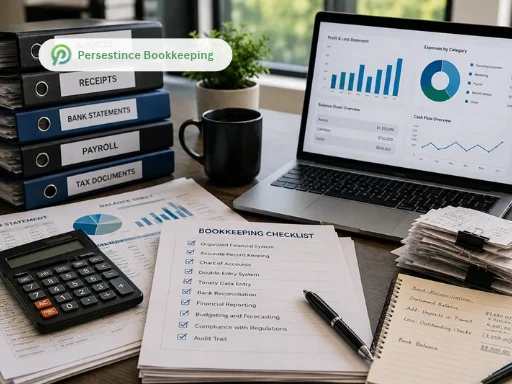







Bookkeeping is the ongoing recording and organizing of every financial transaction in your business. Accurate books matter because they show if you’re making a profit. They also provide the records the IRS expects you to keep. For a small business, good bookkeeping turns bank activity, receipts, invoices, and payroll into usable financial records. So, why is bookkeeping important?
Sometimes, owners are unsure about the difference between bookkeeping, accounting, and tax preparation. That’s understandable. Because the three overlap, it’s easy to put off the books until tax season. The IRS does not require a specific recordkeeping system. It expects records that clearly show income and expenses.
This article explains what a bookkeeper does, how it differs from accounting and tax preparation, why bookkeeping is important, and how long to keep business records. We’ll also cover what happens when your books fall behind, how to prepare for a tax return, and how to get started with a bookkeeping service.
What Does a Bookkeeper Do?
Bookkeeping should actually be a routine task, not something you only pay attention to once a year. Most businesses update their books weekly or monthly so transactions stay current and problems don’t add up.
At Persistence Bookkeeping, we help business owners keep this routine manageable. We can help you with the following tasks:
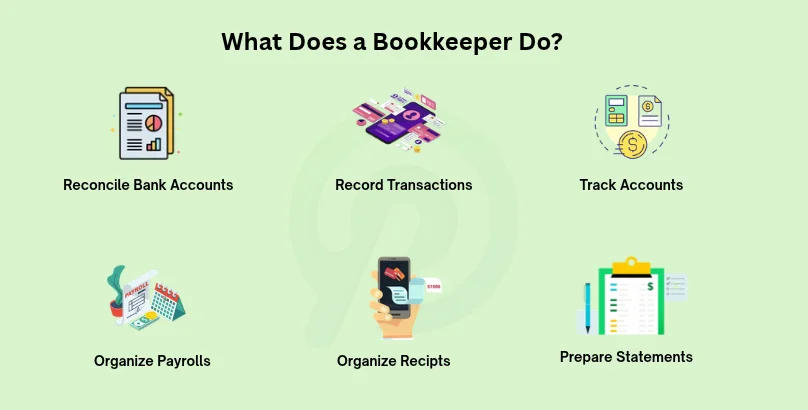
- Task 1. Record and categorize transactions into the proper accounts in your chart of accounts, such as advertising expenses, sales income, or service income.
- Task 2. Reconcile bank and credit card accounts so your books match your statements.
- Task 3. Track accounts receivable (what customers owe you) and accounts payable (what you owe your suppliers), when these services are included in your service plan. .
- Task 4. Keep payroll records in order, often alongside the service that handles employee pay and payroll taxes, when payroll support is included in your service plan.
- Task 5. Organize receipts and supporting documents so every journal entry has backup.
- Task 6. Prepare monthly financial statements, including your profit and loss statement and balance sheet.
These tasks demonstrate the importance of bookkeeping in creating the running record of your company’s financial activity called a general ledger. Monthly bookkeeping also makes transaction categorization, bank reconciliation, and credit card reconciliation easier to manage. It can help you identify transactions that need more attention, find missing invoices, and avoid duplicate charges. If you want help keeping this routine on track, our monthly bookkeeping services can handle the recurring work while you focus on running your business. Book a free consultation to discuss your bookkeeping needs.
Why Is Bookkeeping Important?
Bookkeeping is important because it provides accurate financial records, helps small business owners stay prepared for taxes, makes cash flow easier to see, and supports better business decisions.
Keep the Records the IRS Expects
If you’re wondering why you should keep records? The short answer is, everyone in business must keep records. The IRS expects companies to maintain updated records of every transaction. Proper records help you track progress. They also help you prepare financial statements, identify income sources, track deductible expenses, and support items reported on your tax return.
It’s also important to keep business records and supporting documents like bank statements, receipts, invoices, and payroll records that back up the numbers in your books. These records can also support deductions and credits you claim on a tax return.
Simplify Tax Time and Support Your Deductions
With organized records, you can avoid panic when tax season approaches. Well-maintained books let you quickly find business deductions and answer relevant questions. You also need records to substantiate income, deductions, and credits. Organized receipts and reconciled accounts can make that process much less stressful.
Make Accurate Budgeting Possible
A budget works best when it’s based on actual numbers. When your books are up to date, you can compare income and operating expense plans with each month’s actual figures. This actual-vs-budget comparison helps you adjust early. You can see when spending rises, revenue slows, or a project costs more than expected. That makes it easier to update your forecast and keep your budgeting practical, without the guesswork.
Keep Cash Flow Visible
Cash flow is the money coming into and going out of your business. Current bookkeeping shows your cash inflows and cash outflows, so you can see your working capital before a cash crunch becomes urgent.
This matters even when your business is profitable. A business can have sales on the books but still need cash available to pay vendors, employees, or estimated taxes. Up-to-date bookkeeping helps you plan for payroll, bills, taxes, and slow months.
Support Better Business Decisions
Your financial statements answer practical questions. A profit and loss statement shows revenue, costs, and profitability. It can also help you see your profit margin, or how much you keep from each sale after costs. A balance sheet shows what your business owns and owes on a specific date.
With those reports, you can see which services are profitable, where costs are rising, and whether you can afford to hire. You don’t have to become an accountant to use these financial insights. You just need clean, current numbers.
Prepare for Lenders, Investors, and Buyers
When it’s time to take out a loan, lenders, investors, and potential buyers usually need to see reliable financial statements. Clean, organized books make it easier to prepare for a business loan, talk with investors, or plan for a future sale. They can also help you show your creditworthiness when a lender reviews your application.
Financial statements also support due diligence and business valuation discussions. When your records are organized, you can respond to questions without spending weeks reconstructing your history.
Catch Errors and Missing Transactions Early
Monthly reconciliation makes it easier to find and correct discrepancies. We may discover duplicate charges, missing transactions, bank errors, or unfamiliar activity that could be fraud. Regular reconciliation also reduces the chance that an error remains unnoticed for months and creates a bigger cleanup later. We compare your books with your bank and credit card statements so we can correct discrepancies while they’re still easy to fix.
Keep Business and Personal Finances Separate
A separate business bank account and business credit card make it easier to see which spending belongs to the business. Consistent bookkeeping then helps you distinguish between business expenses, personal expenses, and owner’s draws or distributions.
Mixing funds, sometimes called commingling, makes clean records harder to maintain. Separate accounts and regular categorization give you clearer books and make tax preparation easier.
Bookkeeping vs Accounting vs Tax Preparation
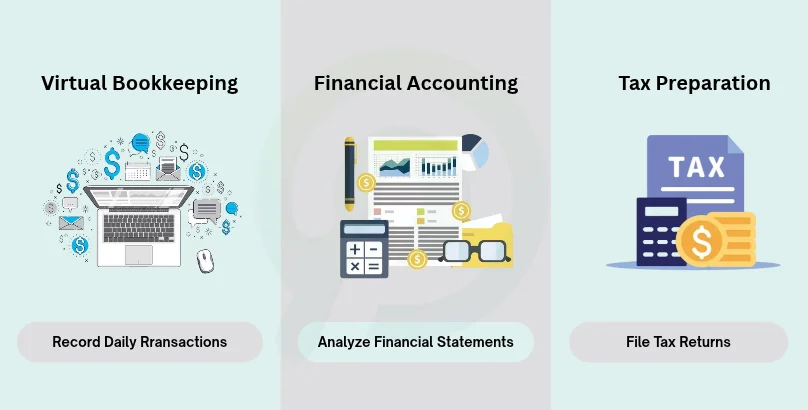
Bookkeeping, accounting, and tax preparation overlap, but they do different jobs. Here’s a simple way to tell them apart:
| Area | Who does it | What it covers | When it happens |
| Bookkeeping | A bookkeeper or business owner | Records and reconciles daily transactions | Throughout the year |
| Accounting | An accountant or CPA (Certified Public Accountant) | Interprets the books, prepares and analyzes financial statements, and supports financial planning using generally accepted accounting principles (GAAP) | Throughout the year |
| Tax preparation | A CPA or enrolled agent | Prepares and files tax returns using the books | Usually annually, with estimated taxes during the year |
A CPA may provide financial analysis and tax advice, while an enrolled agent focuses on tax matters and IRS representation.
How Long Should You Keep Business Records?
How long you keep a record depends on what the document records. In general, keep records long enough to prove the income, deductions, or credits shown on a tax return. Good record retention means keeping the supporting documents behind those numbers.
The following table provides general federal guidance on how long to keep business income tax records. Unless otherwise noted, the retention period begins on the date you file the return. If you file before the due date, the IRS treats the return as filed on the due date. For refund claims, keep records for three years from the date you filed the original return or two years from the date you paid the tax, whichever is later. The IRS retention guidelines also specify situations where records should be kept longer.
| Record type | How long to keep it |
| General income tax records | 3 years from the date the return was filed |
| Refund or credit claim | 3 years from the date the original return was filed, or 2 years from the date the tax was paid, whichever is later |
| Worthless securities or bad debt deduction | 7 years from the date the return was filed |
| Unreported income exceeding 25% of gross income shown on the return | 6 years from the date the return was filed |
| No return filed or fraudulent return | Indefinitely |
| Employment tax records | At least 4 years after the tax becomes due or is paid, whichever is later |
Property records follow a different set of rules. Keep them until the period of limitations expires for the year you dispose of the property, because you may need them to calculate depreciation, amortization, depletion, or a gain or loss.
Electronic records count when you keep them properly and keep a backup. A CPA or enrolled agent can help you decide what to retain for your specific situation, especially if insurance companies, lenders, or state rules require longer retention.
What Happens When Bookkeeping Falls Behind?
When books remain incomplete for months, small issues can soon escalate. Uncategorized transactions pile up, missing receipts make it harder to explain spending, and unreconciled accounts stop matching the statements. Personal and business spending can get mixed up, too. By tax time, owners may face a much larger cleanup than they expected. Late filing and missed deductions can add to the stress.
Catch-up bookkeeping, also called bookkeeping cleanup, brings the records back into order. It usually involves gathering statements and documents, reconciling accounts month by month, reviewing uncategorized transactions, and correcting categories. If your books have fallen behind, we can help with bookkeeping cleanup and catch-up work to get them current without turning it into a year-end crisis.
Signs It Is Time to Hire a Bookkeeper
Doing your own books is possible for a very simple business. The best time to get help depends on complexity, transaction volume, and how much time you have. DIY bookkeeping can work well at first, but as your business grows, you’ll likely have more transactions, more deadlines, and less time to keep up.
Consider hiring a bookkeeper if:
- You have several months of unreconciled bank or credit card accounts and are no longer sure which transactions have been recorded, duplicated, or missed.
- You dread tax season because your records aren’t ready and you expect to spend days looking for receipts, invoices, and answers to questions from your tax preparer.
- You’re unsure whether your business is profitable because your income and expenses are not organized in a way that gives you a clear picture of how the business is performing.
- Personal and business spending are mixed, making it harder to see which costs belong to the business and which are personal owner’s draws, or distributions.
- You’re adding employees, new revenue streams, or more complexity, and monthly bookkeeping is becoming harder to keep up with alongside everything else you need to run.
- Your CPA asks for cleaner books before preparing your return, and you need help organizing records so tax preparation doesn’t turn into a last-minute scramble.
Outsourced bookkeeping can be a practical alternative to hiring an in-house bookkeeper. A virtual bookkeeper can handle monthly bookkeeping, including accounts payable and accounts receivable support, when included in your service plan. As your business grows, the level of support can adjust with you.
Explore our bookkeeping services for your industry to see how we support businesses with different transaction patterns and reporting needs.
Need Help With Your Books? Talk to a Bookkeeper in San Diego
Questions about setting up a chart of accounts, catching up, or choosing software are worth discussing with a bookkeeper in San Diego. You do not need to have everything figured out before you ask. A short conversation can help you understand what needs attention first and what a realistic path forward looks like.
Every business is different. Persistence Bookkeeping provides virtual and in-person bookkeeping services in San Diego, and we work alongside your CPA when needed. Our first consultation is free, so you can discuss your books without pressure. Book a free consultation to discuss your situation.